29 September 2010

Pravda Or Izvestiya?


Might it just be possible that this is a creature of the permanent staff of the Catholic Bishops' Conference of England and Wales?  At one, or two removes, of course; far enough away to be deniable, particularly to their Graces and Lordships.

It's easy to see how much the staff of the CBCEW costs: what does it do?

27 September 2010

What The Bishops Did Next

The obvious thing for the Bishops to do to start building on the Papal visit was to get out there and confirm the brethren: not literally or in their Cathedrals necessarily, but to get out among the flock and build on the foundations established by the Pope.  And it's gratifying to note that if the Bishops' Engagements column in the Catholic press is accurate, that's what a lot of them did.

Many were out in parishes which were celebrating jubilees, a couple were going away on diocesan or society pilgrimages, the Bishop of the Forces was away doing military things, Bishop Conry was at a CAFOD residential weekend, and quite a few had no engagements listed, which probably means that they said Mass in their Cathedrals.  Bishop Budd doesn't seem to send his engagements in any more, and Bishop Lang wasn't listed this week.

I was struck by Archbishop Smith, who could leave Southwark for the day to preach at the service of the annual meeting of the Christian Socialist Movement at Manchester's Anglican Cathedral.

Archbishop Nichols issued a clarion call to the faithful of Westminster.  The Archbishop of Birmingham and the Bishop of Menevia offered Masses of Thanksgiving for the visit.

Next week it will filter down to parish level.

26 September 2010

Good Books: Help Wanted

It was quite a shock to read Fr Hunwicke recently when he said:

Dear old Fortescue's The Mass records the long debates of liturgists a century ago about where the epiclesis of the Roman Rite originally was before it ... er ... "dropped out". Their assumption, of course, was that the epiclesis was original to Christian liturgy and that the Oriental rites which preserve it were more 'primitive' than the Roman Rite. Now, happily, we know better. We see the Oriental epiclesis as a comparatively late fad in the evolving liturgical tradition. Rather than seeking traces of a lost epiclesis in the Canon Romanus, we realise that the prayer Supplices te rogamus, in which we pray that our offerings be taken to the Heavenly Altar, represents an earlier and lovelier expression of the linkage between our offering and the eternal oblation of the Eternal Son at the Heavenly Altar.
Fr Fortescue's work is one I refer to a lot, partly because it is so well written, partly because it is obviously the fruit of great scholarship, but mainly because if there is a newer or better history of the Liturgy, I haven't come across it.

There are specialised publications: Usus Antiquior, now two issues old, will become, I am sure, a focal point for serious students.

But what I am after would be broader, rather than deeper: we need both, but I can only find the deep.

It isn't just liturgical history either: in the same way as I'd like to see a successor to Fr Fortescue, I'd like to see somebody contemporary who could write as well and as meaningfully as Mgr Knox - it's over fifty years since he died.

In the back of my copy of The Mass is an advertisement for Longman's Westminster Library: A series of Manuals for Catholic Priests and Students.  The Mass comes before The Christian Calendar, The Study of the Fathers, The Origin of the Gospels and The Breviary.  Is there any modern equivalent?  Or do I have to throw myself (and my purse) onto Abebooks?

25 September 2010

The Birmingham Three: Catholic Laity In 2010


(The picture is just to show Fr Ray that Methodist Central Hall (sort of) decked itself out for the Pope, as well as The Albert on Victoria St.)

This posting is about England and Wales, even though it might ring true in some other jurisdictions as well. 

We've had priest-blogger equivalents for many years: they write in parish newsletters or the local press; some have columns in the Catholic press, or appear on Thought for the Day.  A reasonable proportion prepare homilies which they deliver each Sunday; a lot of others extemporise.  But we are used to hearing views from the clergy about major issues of the day, the third world, international debt, how wonderful CAFOD is, and sometimes God.  The blogosphere has allowed the more readable clergy and religious to put their offerings before a much wider and international audience, and they are flourishing, offering a distinctive voice in the Church.

But for many years, the only lay bloggers (using the same analogy) were those writing in the Catholic press.  It would be fair to say that the quality of the Catholic press is mixed, in the same way that the gourmet value of most High Street eateries is mixed.  Much of it is dire, but there is the odd jewel (I think, for example, of Stuart Reid) at times, and for some people, it is the only source of intellectual nourishment about the faith (as well as an opportunity to see wha the Press Officers of now-independent Catholic Grammar Schools can boast about).

(The letters page wasn't really an analogue, because somebody else: the editor: has total control of it.  The blogosphere obeys the market: if your blog is valueless, nobody will come.  The Catholic letter page is a command economy: how else would Tom from Somerset ever find any readers?)

So now that there is an alternative, who are the lay Catholic Bloggers, and where are they?  While you read what follows, bear two quotes in mind:

The Pope quoted Newman:

“I want a laity, not arrogant, not rash in speech, not disputatious, but men who know their religion, who enter into it, who know just where they stand, who know what they hold and what they do not, who know their creed so well that they can give an account of it, who know so much of history that they can defend it.”

and Fr Ray, when I asked for leadership from the Hierarchy said:

“Yes, yes, yes but it will only happen only with the help of a well educated laity who make these demands of all the clergy.”

Now, before I continue I want to make one thing very clear: I am not an Oratorian, and, in particular, I am not a member of the Birmingham Oratory.  That means that I don't know what has gone on inside the Oratory.  Something has, because the Oratory received a Visitation, and the Visitor has made some judgements about what happened.

That's all I know.

And that, I suggest tentatively, is all that anybody outside the Oratorian Congregation can possibly know.  But this post is about the Catholic laity who use their voices.

The squaring up of various Catholics in respect of the "Birmingham Three" is actually about something else (which must be a bit of a downer, if you are a Birmingham Oratorian, but hey ho).  It's about lay people deciding that it is up to them themselves where the voice of the Catholic laity can be heard and where it should be heard, and it's about who identifies both the Catholic laity who have voices, and the voices which belong to the Catholic laity.

This is an extraordinary and ironic fruit of the "Spirit of Vatican II": the lay people it "empowered" to throw off clericalism and speak as equal members of God's Church have done so, but many are so off-message that they are threatening to upset the equilibrium that the S of V II appeared to have imposed on the Catholic Church here.

There are five different strands of commentary which are fairly easy to identify (please don't get hung up on the labels - that's all they are):

The Tabletistas: those in favour of the anti-Benedictine pro-"Spirit of Vatican II" status quo; the people who in the main hold the levers of power; people who sneer at the Pope and those who accept his theology and ecclesiology; its loony fringe is liberal Anglicanism;

The NeoCons: JPII Catholics; often articulate spokesmen often from the new movements; sometimes converts from Anglicanism; vigorous; orthodox insofar as they have ever come across the orthodox teachings of the Church, but sometimes a bit over-confident in the way in which they articulate what they believe that Catholic believe;

The Neither of the Above: JPII  Catholics, articulate spokesmen who are neither of the above.  At a major disadvantage because they don't belong to a group which nourishes and supports them.

The Trads: sometimes articulate, sometimes "differently choate" spokesmen for a pre-JP II view of Catholicsm.  At an even greater disadvantage because they don't belong to a group and the first two groups are firing missiles at the place where they would try to form a group if they could.  People gather around the leading trad bloggers but these people can be ignored online as lay Catholics are ignored in the real world by the powerful.  Its loony fringe comes from the traddier-than-thou tendency (we'll have an SSSG soon which will recreate the Liturgy of the 6th Century and it will immediately force the formation of a counter-group which despises St Gregory for his actions in rewriting the Roman Mass);

and, on his own:

Damian Thompson:  unwilling to lead the faction which would follow him (and who could blame him, knowing what he'd have following him, as well as what he'd have opposing him).  The Boris Johnson of English and Welsh Catholicsm (mutatis mutandis of course).

Catholic Voices could have been an interesting way of bringing together the non-Tabletista tendencies and to have created a powerful force in the Church, one which might have been able to achieve what the Pope and Fr Ray asked for.  We might have had a sort of Catholic Evidence Guild which preached the Truth inside the Church as well as outside it.  The way the idea was emasculated, the way in which the Birmingham Oratory became a battlefield for something else, will be familiar to anybody with experience of student politics.  But might it also be a case that "they" are beginning to run scared?

What next?
.

22 September 2010

A Tentative Return

Ironically, I spent the period of the Pope's visit in London, but was working.  I got out early in the morning, and managed this spectacularly empty picture of the Mall soon after 7.00 am on saturday morning, but spent most of my time indoors and with very limited access to television except for the News at the end of the day.  The only service I saw all the way through was the Evensong at Westminster Abbey, and it caused me to reflect,  first that Mgr Marini and the Pope both seemed alive to the sheer quality of the service on offer: a modern composition to welcome the Pope which didn't quite come off but scored an A+ for showing willing; Stanford, whose music the Holy Father may never have heard but which is the embodiment of a particular sort of observant Anglicanism; properly vested clergy; clergy who knew all the verses to their hymns; a sense that this was their new Sunday best, that they would do absolutely everything that they could to welcome their very distinguished and very welcome guest; and second, that it just didn't cut it; that what was happening was an end, not a beginning; that this was probably the last time that a Pope would engage with the Church of England as it has been since the Restoration of our Hierarchy; and third, that our Hierarchy just isn't up to it.  Hearing the addresses of the Pope and of the Archbishop of Canterbury, I wondered which Bishop in England and Wales would be able to write something so intellectually commanding.  Most could emulate the theological wrongness of the A of C, but not the intellect.  We don't have Bishops of the calibre to take on the secular world: that's why it's taken the Pope's visit to alert the media that there is a radical alternative to the world, the flesh and the devil.  The Bishop of Arundel and Brighton preened himself that the Pope would come and see a Rolls Royce model of how to manage terminal decline: instead the Pope preached a path to a new springtime.

In fact, when I think about the Hierarchy, the word that springs to mind is "mediocre".  We are desperate for leaders: they don't all have to be intellectuals, though it would be nice if two or three were; they don't all have to be profound theologians, though it would be nice if two or three were; they don't all have to be gifted administrators, though it would be nice if two or three were; they don't all have be be good communicators, though it would be nice if two or three were; but they have to be able to lead us.

When Cardinal Murphy O'Connor's resignation approached, Cardinal Pell's suddenly appearing as a candidate wasn't an accident.  This was not a game of Fantasy Archiepiscopal Nominations: what was wanted was a debate about the sort of person the Church in England and Wales needed, and the Vincent Nichols who was Archbishop of Birmingham when Cardinal M O'C was 74 needed to show himself as something other if he were to become the Archbishop of Westminster we need.  We needed somebody who could approach the cathedra in awe and aim to grow into it, rather than try to shrink the cathedra to his stature.  I still think the jury is out, but what happens during the next few months, after we have reflected on the messages the Pope has left us, will tell us which course he is trying to steer.

More soon on what it was like to watch the way that Catholic bloggers told the story of the Birmingham Oratory.

16 July 2010

Æstivation

.
I was moved to start this blog by a comment made by the Editor of The Universe about something I'd written:

“I was about to bash out yet another indignant reply pointing out that The Universe is a loyal organ that is constantly questioning and analysing general policies through its feature writers, then I came to the second part of your comment, and actually you’ve right, and you’ve hit on something really important here – how does one write a loyal but at the same time questioning article that doesn’t end up like a soggy pastry? I must admit we’ve tended to steer our writers (and they’ve steered themselves) towards a formula just such as Ttony has described – the message tends to end up the same whatever the subject – “doing great but could do better”. I must admit this has become so commonplace that I’ve all but banned headlines that include statements of the blindingly obvious like “Church could do more to ….” And “Our duty to ….” The real difficulty here is that natural journalistic instinct says that contributors and commentators should just be allowed to sound off (within reason) on any topic they feel very strongly about. The danger is a) that your Catholic paper ends up being a shooting gallery, and that b) we must never forget that Catholic papers have a dual role – to inform the faithful, but also as tools of positive evangelisation for non-Catholics that might pick them up. Critical comment can be indicative of a vibrant, open and developing Church, but right now ours isn’t and – most importantly – I don’t think everyone has the confidence or maturity to engage some of these contentious debates, though that’s changing through the unavoidable reality of decline, and the consequences that brings. When I was formulating the loyalty policy of The Universe, my own bishop, Edwin Regan, summed up what was needed from the Catholic press perfectly – the phrase he used was ‘critical solidarity’, which sounds to me exactly what Ttony is asking for.”

The problem is that I find myself in exactly the same position as the people I had been criticising: I want to write what I really think about some of the people exercising authority both in the Church in England and Wales, and in broader Catholic life (the Tablet Trust, the Catholic Union, Catholic Voices etc), but find myself unable to publish some things that I know, and some that I think, because they would give scandal.

The scandalous private life of a very senior Catholic person is crying out for exposure, but it will not be done by me; my Bishop is in a position vis-à-vis the magisterium that would be easily characterised as schismatic, but it won't be by me; you can fairly easily obtain tickets for Papal ceremonies in September that were allocated in the expectation that they would be issued to parishioners, but it won't be me saying how.  Three examples of something I know about: lots of you know about others.  And none of us feel able to say anything.

Æstivation: I shall retreat from the blog for the summer and watch and wonder and brood about just how far the leadership of the Catholic Church in England and Wales can take the ... let's say the mickey, before people like me turn on them with the wrath that (I increasingly feel) they are going to be visited with. 

09 July 2010

A New Blog

.
Here's a rather good idea.

Somebody who is receiving CTS pamphlets for review, when the paper which commissioned him to review them no longer wants to review them, is casting his reviews on to the tides of the Catholic blogosphere.

The CTS is one of the quiet success stories of the last few years: I expect that during the Very Bad Times it was expected that they would wither and die and so were left alone, but with a foundation, a back catalogue, and an understanding of what the market for pamphets really wants.

The column of pamphlets at the back of Church seems much more up to date than it used to, and these reviews will help point me to the ones I need to read, so that I can have a bit of foundation myself.
.

03 July 2010

Something I Hadn't Noticed

.
Edited to take account of Madame Evangelista's comment.

I've been trying to work out what it is about the Bishops' Conference that makes them so, well, different.  They seem to march to a different drum from many of us; they don't seem to like to make decisions on their own; they're just not what one expects of Bishops.  I might have hit on something.  If, like me, you remember the time when you went to University as a defining moment in growing up, you might find it strange that so few of our Bishops had that experience in that way.  Being 18 and suddenly being on your own, having to manage finances, make new friends, learn how to hold your drink, make outrageous mistakes and get away with it: in short, having to grow up.  Of course, you don't have to go to University to do this - you just have to leave home and set up shop somewhere.  But the University analogy is apt for people who are going away to study for a qualification; and the leaving home analogy isn't apt for people who leave their parents' home for a sort of religious boarding school where board and lodging is provided at somebody else's expense.  Of course all of the Bishops eventually were left to their own devices and had to sort of make do by themselves, but at a much later age, and when they were different people.

If you don't count being at a Seminary like Ushaw or Valladolid where you attend University classes (much less Rome), how many of our Bishops have had that experience?
  • Bishop Arnold – yes: a barrister
  • Bishop Brain - no
  • Bishop Budd - no
  • Bishop Burns - no
  • Bishop Campbell - no
  • Bishop Conry – no
  • Bishop Cunningham – no
  • Bishop Davies - no
  • Bishop Doyle – no
  • Bishop Drainey - no
  • Bishop Evans - no
  • Bishop Paul Hendricks - yes: a physicist who worked for two years for GEC
  • Bishop Hine (I can't find out about his education)
  • Bishop Hollis - yes read Modern History at Balliol
  • Bishop Hopes – trained as an Anglican priest
  • Archbishop Kelly – no
  • Bishop Kenney - no (though his experience in Sweden mark him out as differently formed)
  • Bishop Lang - no
  • Bishop Longley - yes: studied music at the  RNCM in Manchester and New College, Oxford
  • Bishop Lynch - no
  • Bishop McGough - no
  • Bishop Malcolm McMahon - yes Mechanical Engineering and worked for Daimler and London Transport
  • Bishop Thomas McMahon - no (though he trained in France, which is different)
  • Bishop Moth - no
  • Archbishop Nichols - no
  • Bishop Noble (I can't find out about his education)
  • Bishop Rawsthorne - no
  • Bishop Regan - no
  • Bishop Roche - no
  • Archbishop Smith - yes: Law degree from Exeter
  • Bishop Stack - no
  • Bishop Williams - no (in fact entered Junior Seminary aged 13 years old in 1961)

Now, there's nothing wrong with the formation any of them has had, nor is there any reason to expect that a Bishop should have gone to University.  But their background sets them apart from many of the people they have to deal with.
Is this why they have come to depend on the Tabletistas?

Incidentally the page here where they have published their CVs is illuminating in many respects.
.


20 June 2010

Hiatus

.
This isn't just me not posting.  It's me run off my feet at work and at home and having little time, as well as having more and more questions stacking up as the Papal Visit "planning" is revealed.  More soon, honest!

13 June 2010

Odd Behaviour By A Great Tit


I was watching a coal tit - we've not had one in the garden before - when I was told to look at the shed.

Was the great tit on the roof dead?  Had a cat gone for it?

No.   It was sunbathing.  It stayed for about three minutes then flew off.

Odd.  I've seen blackbirds doing this, and, suicidally, doing it on the grass.  but never a tit, andf never on a roof.

09 June 2010

Cardinal Pell Staying Put?

.
According to la cigüeña de la torre here, Cardinal Pell has asked the Pope not to name him Prefect of the Congregation of Bishops, for reasons of age and health.  Don Francisco José Fernández de la Cigoña  is of the opinion that the Pope may still be trying to persuade Cardinal Pell, but that Cardinal Sandri's name is already being mentioned as an alternative.
,

05 June 2010

My Hierarchy And Yours

Quite a few years ago, exasperated at the failure of an RAF Squadron Leader to get to grips with a project he was responsible for, a bunch of us conspired to make him responsible for a social evening, which, we suggested, ought to take place in the restaurant run by the local beer manufacturer.  Our intention was to allow him to demonstrate whether or not he was capable of organising a piss-up in a brewery: he wasn't.

I look at the way the Hierarchy is organisaing the Papal visit, and I start to think similar thoughts.  Just two examples:

The "Catholic" Education Service: it tried to set up a deal with Ed Balls which would allow abortion propoganda in Catholic schools when it was clear his party was about to be voted out; it then found a pro-life-some-of-the-time discredited MP to become its Deputy Head; now it has bravely set itself up against the idea that Catholic parents might take control of Catholic schools.  Why?

The Hierarchy was given a mandate by the Pope during the ad limina visit at the start of the year:

"Your visit to Rome strengthens the bonds of communion between the Catholic community in your country and the Apostolic See, a communion that sustained your people’s faith for centuries, and today provides fresh energies for renewal and evangelization. Even amid the pressures of a secular age, there are many signs of living faith and devotion among the Catholics of England and Wales. I am thinking, for example, of the enthusiasm generated by the visit of the relics of Saint Thérèse, the interest aroused by the prospect of Cardinal Newman’s beatification, and the eagerness of young people to take part in pilgrimages and World Youth Days. On the occasion of my forthcoming Apostolic Visit to Great Britain, I shall be able to witness that faith for myself and, as Successor of Peter, to strengthen and confirm it. During the months of preparation that lie ahead, be sure to encourage the Catholics of England and Wales in their devotion, and assure them that the Pope constantly remembers them in his prayers and holds them in his heart."

How many of you, like me, have heard nothing whatsoever of any sort of preparation for this visit?  How many of you, like me, have yet to find yourself in a church prepared to take up a second collection for the visit?  I'm beginning to get a bit annoyed by all of this. 

So here's a question: in the light of the forthcoming visit, who do the Bishops think they are? 

Are they Princes of the Church, prepared to welcome their temporal superior?  Are they Heads of a local Church prepared to welcome their Patriarch?  Are they the servants of God, prepared to welcome the Servant of the Servants of God? 

Or are they the equal (or even the better) of the Pope?

And where do they think that we fit in (other than putting notes into the collection)?

01 June 2010

Irony Abroad In Israel

.
It's no so long since a poor suffering people found themselves on the high seas, desperately trying to reach Palestine, and being stopped, perfectly legitimately, on those high seas, by the naval forces of a legitimate state which wanted to ensure that they would commit no mischief if allowed to proceed, and which, on finding that mischief was intended, boarded their ships and sent them back.

One such episode ended up giving its title to a film: Exodus; though the story of the ship is as interesting.

Irony: always there somewhere if people who know their rights try to stand on them, especially if their rights might impinge on someone else's as well.
.

24 May 2010

A Recommended Podcast From Father Z

.
Over here, Fr Z has had the really good idea to use a podcast to say the new translation of the Roman Canon as we are likely to hear it.  He prefaces it by saying the current translation of Eucharistic Prayer 1 as we are wont to hear it.

Hearing the Canon in a new translation is a much bigger deal than I had expected; it is completely different from reading a translation (or the Latin) while the priest is talking.

I hope the catechesis picks up on the richness of the fare on offer and doesn't try to explain it away.

Most of all, I hope that the Bishops encourage priests to use this opportunity to evangelise: the whole of God's religion is contained in this six or seven minutes.  Think what a holy priest might do with it; think what a country full of holy priests might do with it!
.

22 May 2010

How To Respond To The Abortarium Advert On Monday

.
Boycott all of the products advertised during the same commercial break, and write to the companies concerned telling them why.
.

21 May 2010

On Not Joining The New Altar Servers' Organisation

.
I understand that a new Altar servers' Sodality was set up last weekend and that details are available here.

I'm not joining.  I joined the Archconfraternity of St Stephen forty-five years ago and I use its 1962 Handbook to this day when I serve.  There is no reason to set up a new organisation, other than in an attempt to gain some form of "ownership" of the Extraordinary Form in the Church in England and Wales.

I'm not a member of the LMS either, for similar reasons.

And I normally attend OF Mass, even when I know by whom and how it's going to be celebrated.

Anything which tends towards the fostering of disunity ought to be shunned.

UPDATE:

What's all this about?  This was in response to what I think was an intemperate message telling me (as it seemed to me) that I had to join this Sodality if I were to be considered a "real" 1962 EF Mass server.  I responded "assertively" and was then made aware that those attending OF Mass when EF Mass was easily available were not considered necessarily suitable for serving at EF Mass.  Lots of paraphrase here!
.

15 May 2010

Preparing For An Anniversary

.
For various reasons, I am involved in preparations for one celebration of the 70th Anniversary of the Battle of Britain (as are so many other people and organisations!) and I have had a curious insight.  I reckon that most of us who were born between 1945 and 1960 are as affected by the Second World War as though we'd lived through it. 

We eat everything that's put in front of it; we don't make a fuss; we accept that not everything will work as scheduled; our upper lip is stiff; we don't expect that things will ever be perfect.

We were brought up by people who were formed by military service and by rationing.  Military service was reflected in a profusion of clubs, socieites, sodalities and guilds in which there was a hierarchy of posts up which one could ascend; in an expectation that the Man in Whitehall could behave as though he knew best; in politeness, deference and civility; in queueing.  Rationing was reflected in awful food: you cooked what you were given, out of what was available.  Meat was always overcooked because that way any iffiness (whether of source or freshness) might be overcome; food served at restaurants was "fancy", because the link between how you ate at home and how we had always eaten was lost; egg and chips became an option for a meal.

When we were little, our parents expected that we would end up being called up, and we'd end up fighting the Soviets; so discipline mattered, because it would make the transition to Basic Training a tinier bit easier.  "March nicely, boys" to a playground full of infants.

And that meant that our end was nigher, and that we ought to prepare for the Last things first.  A class of seven year olds singing "Dear St Joseph Spouse of Mary" would bellow out the chorus "Teach, O teach, us how to die" and our parents would be glad we were learning how to prepare ourselves for what was coming.

Then the 1960s happened.

Every time the Nazi says "Good Luck" to Gordon Jackson, and he replies "Thank You" during "The Great Escape", I know what side I'm on, and have been on since ever I can remember, and why. 

And I feel the most curious nostalgia for a time I cannot possibly remember.
.

13 May 2010

A Service For Europe

.
I hope to goodness that Rocky Horror Paraliturgies aren't a part of the Anglican Patrimony that the Ordinariates will keep.

Look at this write-up here and if you want the full horror, look here.

I wish this were a Private Eye joke.
.

09 May 2010

Keep Your Hand On Your Ha'penny

.
Not advice about economics.

When I was about 13 or 14, there was nothing more embarrassing than hearing my Grandmother and her friends singing this song.

Nowadays I can only marvel at them.


.

We Want Our Trophy Back

.
What is true about football is true about so much else.

We had something; somebody has taken it away; we want it back.
.

03 May 2010

Cardinal Pell to Rome

.
According to the stork on the tower, Cardinal Re will be replaced by Cardinal Pell as Head of the Congregation for Bishops, the announcement possibly being made this month, but if not certainly in June.

Oremus.
.

01 May 2010

Homer Nods?

.

Indignor quandoque bonus dormitat Homerus - one of the scraps of the classics I still remember without having to look it up.  (Add Loeb editions, with the Latin on the left hand page and the English on the right to a good memory and you're half way to a JMB GCE O Level.)

It's the concept that counts, though.  Most of us get all sort of things wrong, and all of us get at least the odd thing wrong.

And you'd have to be the most extremely ultramontane supporter of Pope Pius XII, and the date about 1950 if you wanted to try to suggest that the Pope never gets things wrong.  But he does.

One thing was the appointment of Cardinal Murphy O'Connor to the Congregation for Bishops.  It might have felt like a nice consolation prize to soften the blow of leaving Westminster, and to Archbishop Nichols at that, but it's more important than a sinecure.  Every time the Nuncio comes up with a suggestion for a new Bishop for England and Wales (or, I assume, for Scotland too), there's CMO'C able to explain in great detail exactly why the Nuncio has got it right, just how sound a man the candidate is, and just why he's exactly the right Bishop for that See at this time.  And nobody else in the Congregation can answer the arguments, because the premisses have been stated by CMO'C as axioms and nobody else knows the Church on the ground in England and Wales well enough to argue.

It would be great for us if Damian is right, and Cardinal Pell is to take over as Head of the Congregation for Bishops, because his influence will trump that of CMO'C.  But how many other superannuated Cardinals are being given posts like this, where they exercise significant influence whilst carrying no formal responsibility?  And in which Congregations?

Once their resignation is accepted, off they should go.  There is plenty of pastoral work to do if they want to remain active as simple priests, or they can write their memoirs, or they can retreat quietly to make their souls.  But away, please!

27 April 2010

Louis MacNeice

.
A tiny and unrepresentative extract from the end of 1953 which nonetheless speaks to me of something nearer:

... To discern
The future is not easy since those fires
That warm us are the selfsame fires that burn

Our guts, and since the wood of our desires
Consists of single yet entangled trees
Which maybe form a wood the world requires

But yet a wood which none distinctly sees
Or fully finds his way in.  This being true,
I wait unmoving by degrees

Towards home where waits one person which is you
Who takes the ancient view that life is holy.

.

25 April 2010

Happiness is ...

Happiness is a new 1.5 TB external hard drive for under £100 and a way of backing everything up.

There are twice as many computers as people in this house.

What Probably Happened In FCO

.
Deep in the bowels of the Southern Europe Department of the Foreign and Commonwealth Office, a junior member of staff has been asked to start thinking about themes and possible visits for the visit of the Pope.  remember: this visit is a State Visit and not (just) a pastoral visit by the Pope to British Catholics.

Once upon a time, this would have produced a series of considered options which would have found their way to the Department Head; he would have selected the most promising, and a submission would flow up the system until it reached the Secretary of State in a final form for him to approve.

What has happened here is that some junior members of staff have been daring (challenging, ironic, post-modern) and after a brainstorming session one has put up the sort of puerile tripe you might get from a sixth-form revue in a progressive Comprehensive, and this has been leaked.

This isn't about the Pope's visit at all, and the Ambassador to the Holy See's apology will put an end to the diplomatic difficulties.

The question is what this says about the judgement of those being recruited as the next generation of British diplomats and what it says about FCO's recruitment priorities.

Have a look here at the list of Foreign Secretaries since the Foreign and Commonwealth Office was established in 1968, and see if you can work out when the rot might have set in.

24 April 2010

Prayer To St Monica?

.
Does anybody know of any good prayers to St Monica?  Not the novena you find when you google, which is an admirable prayer for wives and mothers, but a way in which we can invoke the prayers which St Augustine credited with bringing him back to God.

There is a large number, and there will be a much larger number, of children leaving Catholic schools who really could do with her prayers.
.

23 April 2010

A Much Needed Discussion

.
I ordered a copy of Mgr Brunero Gherardini's book about Vatican II because Fr Hunwicke's recommendation of it was so effusive.

It arrived today: free, but with a suggestion that €18.70 might be an appropriate donation to the Suore Franciscane dell'Immacolata.

I like the business model.

A quick skim suggests that I'll end up very irritated by the translation, and fairly depressed by the arguments.  Depressed, not because Mgr Gherardini isn't right on the money, but rather depressed because he isn't off the money.

There's an obvious answer to this question but I'll ask it anyway: can somebody recommend a (a) truthful (b) Catholic book about the Council and its aftermath which is (c) positive about them?

22 April 2010

Football! Goal!

Gimnasia La Plata versus Boca Juniors in the Argentine League.

Who scored?


19 April 2010

Küng's Pathetic Call

.
Translated from Francisco José Fernández de la Cigoña's article here.

Theologian Hans Küng is a theological protester who refuses to be nothing in the Church. Aged 82, and forbidden to be a Catholic teacher, he lives in a past to which he clings, as it is the only thing he has left. Cheered on by the enemies of Catholicism and by the few contemporaries left within the Church who do not want to admit that nobody shares their youthful dreams any more, he keeps hold of the banner he once raised which has turned into tatters, faded by the passage of time.


At the end of his active life, and longing for days when he was considered to be a theological authority, he has called on the bishops to rebel against Benedict XVI. I do not know if it is because of an age-related condition or his overweening pride that he thinks that his voice is that of the Church. It is pathetic.

Not one bishop has answered his pitiful call.  Not one will, even though some of them are awful. The recent attacks on the Pope, in which Küng is a mere foot soldier, are only succeeding in making the Church close ranks in affection for the Holy Father. He is the rock upon which it is founded, without which it would not exist.
The positions taken by Küng and his followers only feed the anti-Church. The proof of this is that they are only taken up in anti-Catholic media, in which one can find some who still call themselves Catholics in spite of having sold out on the Church's Faith and Morals.

Hans Küng is one of them. He sold his birthright for a mess of pottage and is now choking, both because of his age and because even he has become bored with lentils, however hard it is for him to acknowledge the fact. Each day they taste more watery and have less substance.
He has only two choices. Either he overcomes the envy he has for his former fellow teacher, disappearing into history as in a few years he will not be remembered by anyone as he returns to the Father's house, or he ekes out the remainder of his days in a futile and pathetic protest.

16 April 2010

Something Strange

.

I can't remember a time when, in the UK, I haven't been aware daily of aircraft flying overhead.

There is a strange silence, or rather an absence, because apart from light aircraft and military aviation, most aircraft overfly us at about 25,000 feet as they either begin their descent from or get near to completion of their ascent to cruising altitude.  The lack of vapour trails in the air is disconcerting.

The sky looks different.

15 April 2010

The Next Pope?

.
Ad Multissimos Annos to the Holy Father of course, but he is not immortal.

I was intrigued to find out that Paddy Power is offering 25/1 against Antonio Cardinal Cañizares Llovera, Prefect of the Congregation for Divine Worship and Discipline of the Sacraments, becoming the next Pope.

Has there ever been a Pope James?

13 April 2010

Notes To Support A Counter-Narrative

.
It shouldn't be me doing this. It should be somebody more competent, who could make a better job of it.  This is no more than a start.  If you can do better, please do, and encourage the Hierarchy to come out and fight.

1     This is not about the Catholic Church.  This is about some bad men who committed acts of sex abuse against children for whom they had a responsibility of pastoral care.  Secondarily, it is about other men, some more, some less bad, who found out what was happening and reacted inappropriately

1.1     The Catholic Church is not a unitary body apable of imposing and maintaining discipline.  It is a confederation of dioceses.

1.1.1     The legal system used by the Church - Canon Law - was first codified less than a hundred years ago and uses the principle of subsidiarity to attempt to resolve problems at the lowest level.

1.1.2     Cases can gradually move up the system to Rome but, as in civil and criminal cases in UK courts, this takes time.

1.2     The Catholic Church's responsibility for the actions of its members is limited, to say the least.

2     The crime these men have committed is sexual abuse of minors, not paedophilia.

2.1     Paedophilia is a condition, not a crime.

2.2     Sexual abuse has taken place when adults commit sexual acts with under-16s.

2.2.1     The sexual abuse is aggravated because of the position of responsibility in which these men found themselves and their use of the position to procure the children they abused.

3     Those within the Church who discovered what had happened and did not deliver the abusers to the civil authorities did a great wrong.

3.1     In some cases this was done purely to protect abusers: in these cases the protector is as culpable as the abuser, because he created an objective circumstance in which the abuse could continue.

3.2     In some cases, this was done to protect the reputation of the Church.  While laudable as an aim, the damage done to children and the need to remove the abuser from a position in which he could continue to abuse were so much greater that the judgement of these men must be called into question.

3.3     In some cases, this was done because the discoverer could simply not believe that such abuse could be committed by a priest.  With hindsight, it is clear that these people should not have been put into a position where they were responsible for such decisions.

4     Anybody who uses a position of power to entice or procure an under-16 for sexual gratification is guilty of the same crime of abuse as has been committed by some Catholic priests.

4.0.1     They may be members of a national or local government organisation with formal responsibility for children, such as a local authority's child protection scheme.

4.0.2     They may work in a sector through which vulnerable children pass, for example the legal sector in a devolved administration.

4.0.3     They may work in the voluntary sector in schemes in which vulnerable children may become available to them, such as local housing schemes for asylum seekers.

12 April 2010

Cooperative Finchdom


While the greenfinch waits patiently for its turn at the feeder, the goldfinch eats greedily and scatters seeds down onto the grass below where the chaffinch is waiting. 

Yes, I know: I should be encouraging or chiding Bishops and priests into defending the Pope, and encouraging the Catholic Union to lead the charge against Hitchens and Dawkins, but, on the whole, I feel that contemplation of the finch family offers a better prospect of ending the day without feeling that I've been banging my head against a brick wall.

11 April 2010

Sermons In Stone


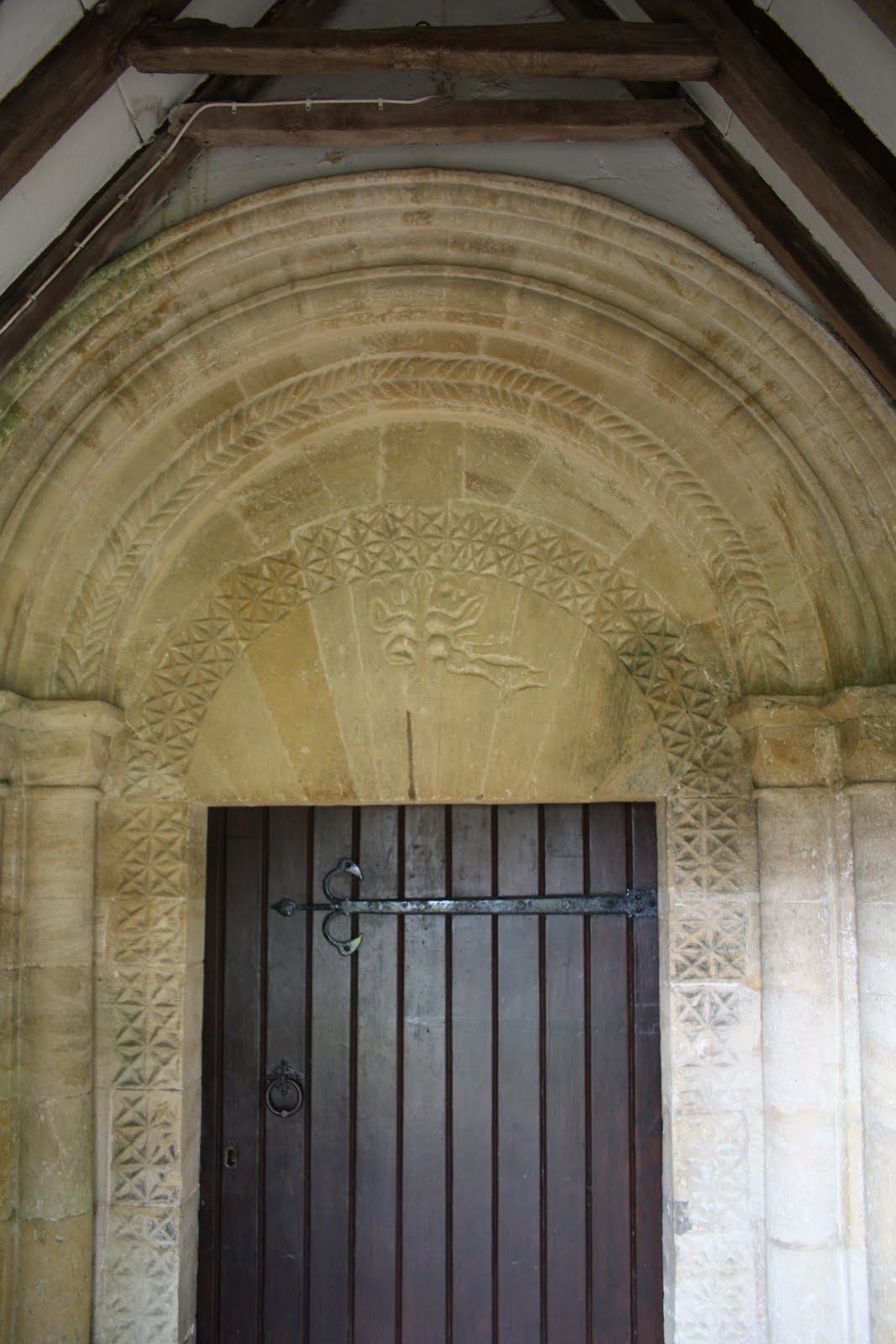
The manor was taken from its owner at the time of the Conquest and the new Norman lord commanded that a church be built. Above the door to to the church, somebody began to carve a tree of life, but gave up after completing a bird pecking at the branch.


On some of the capitals of the pillars of the chancel arch, somebody tried to show a man struggling with the serpent, and of a woman holding it to her chest.


The window has been dated to around 1100: the capitals don't match.

It's not much of a success from an artistic or architectural point of view, but the imperfections have come because men lifted their eyes high and tried to achieve things that ended up being beyond them.

And 900 years later, it's still there.

10 April 2010

Polonia Semper Fidelis

.
The cruellest of ironies is that the Poles who have died were finally being given permission to commemorate what the Soviet Union did seventy years ago, and that they died in Russia. All we can do is pray.


08 April 2010

In Purdah

.
Being a particular sort of civil servant, I am forbidden from blogging about anything that might be construed as politically partial and tending towards affecting the election result, for at least the next four weeks.

And I didn't have to pay a penny ... !
.

07 April 2010

To Africa With Brother James

.
What happens when you take a bunch of English teenagers to Senegal?

Look here to find out.

The kids are great, and Bro James, who is leading them there, is pretty inspiring himself.
.

06 April 2010

Opus Dei Bishop For Los Angeles!

.
Bishop Gomez of San Antonio.

Cat, pigeons ...

31 March 2010

Out Of The Mouths ...

.
Via Love Undefiled, I found three videos on YouTube in which a twelve year old boy about to die meditates on his life and his faith. I've copied the links below.


Part One


Part Two


Part Three

I reflected while watching this that this is the sort of child some very, very, bad priests and religious preyed on. Defend the Pope, defend the Church, but at the same time remember the sort of filth that has defiled something we love, and some people we should love.
.

30 March 2010

Fr Z and the Goldfinch Coincidence

.

No sooner does the first ever pair of Goldfinch come and start feeding from the feeder in the magnolia than Fr Z posts about the Holy Week symbolism of goldfinch here. This pair is so timid that they can even be frightened by the blue tits that come round.
I'd never before heard the story about these birds getting their red faces from trying to remove the thorns from Our Lord's head. I wish I had children young enough to tell.
.

28 March 2010

Lucky Old Brentford Diocese

.
Not only must the diocese must be loaded with money, but the whole diocese is going to reap the benefit of how it's spent.

H/t to Catholic Commentary here who broke the news that Brentford sent a team of 19 people to the Los Angeles RE Conference. I'd guess about £750 a ticket and £750 per head for subs while there: about £30,000, and the money must have come from somewhere - unless people actually paid their own money to go there.

But just think how the life of the diocese will be transformed!
.

27 March 2010

Standing Up For The Pope

.
Fr Hunwicke, here, is absolutely spot on.

I do wish he'd become a Catholic and stop protestantly deciding for himself what he should do from day to day. But I shall refrain from saying anything negative about him for some time after reading this incisive post!

If he takes advantage of the Ordinariate provisions, I wonder which Catholic Bishop will find himself with Fr H ministering in his territorial diocese.

Can we get a petition up?
.

26 March 2010

How To Avoid Having To "Marry" Gays In Church

.
Easy

Don't "marry" straights in Church. Separate the Sacrament of Marriage from the civil contract.

Embrace the French model. The state does what it believes in at the Mairie. The Church does what it wants at Church.

Priests aren't registrars of birth or death; they don't have to be of marriage.

We're not Anglicans: we don't need an ecclesiastical Civil Service.
.

23 March 2010

More Support To Our Apologetics

.
Fr Dwight has posted here a set of facts demonstrating that the Chuirch is not a paedophile institution, and that paedophilia is not particularly prrevalent in the Church.

My apologies for not crediting whoever linked originally to the posting on Fr Abberton's blog here. His argument about the reality of the presence of the Devil in this crisis is thought provoking, to say the least, and should be something we address in Catholic circles.
.

22 March 2010

Countering The Narrative

.
The tactic being used by the Times at the moment is as old as the hills. Establish a narrative, then keep repeating it, until it becomes received wisdom. Is there anybody in the English-speaking who soesn't know that Joseph Ratzinger was in the Hitler Youth? But how many people know that he stood up to a CO who wanted all his charges to become soldiers by saying that he wanted to become a priest? Next to nobody.

If the narrative is never challenged, it becomes what everybody believes, and even ten years ago, the media's narratives were impossible to challenge unless you happened to have a media organisation of your own.

But that's not true any more: nearly all sources of information on the Internet, be they press sites, or social media sites like this, offer the opportunity to comment.

We are all Internet-savvy people: I must be to be writing this; you must be to be reading this and commenting on it. So get commenting. Every time you see a piece about the Pope that is not true, challenge it. Use for example the Pope's letter to Ireland, available here, to challenge anybody who says "the Pope didn't apologise" by cutting and pasting the sections where the Pope apologises. Some of you will want to do so politely, others will take on the tone of the milieu in which they find themselves. It doesn't matter too much as long as we are accurate, and cite our sources.

This is a poor man's Internet version of the Catholic Evidence Guild going out to Speakers' Corner: but we can all do it.

21 March 2010

God Bless Our Pope ...

.
... because few of the children of this earth will.

But let's keep a count of the Catholic Bishops of England and Wales who leap up on to the parapet to bless, support and defend the Pope.

Equally, let's keep a list of those who by omission or commission let the Pope take the flak, especially the ones who damn him with faint praise.

And do we need Paddy Power to open a book for us to guess which list will be longer?
.

19 March 2010

Cardinal Pell, Again

.
I was alerted by the wonderful Schutz that a debate between Cardinal Pell and an American atheist had been placed on line. The two mp3s are available here.

It's a proper debate, not a TV debate, so don't expect fireworks. Expect hmms and haaas; listen to ideas unfolding while the speaker is speaking; note the respect that the two speakers show for each other as individuals; and note that, while they both really care about what they believe in, Cardinal Pell happens to believe in what we believe in.

Cardinal Pell is a standing challenge to the Bishops' Conference of England and Wales: he is a product of a British educational system and has developed a confident and assertive voice that our Bishops should be able to draw on and develop in their turn around the particular circumstances they face.

So why do we not have a Bishop who will engage as Cardinal Pell engages? Not all of them: "What if ten shall be found there?"

18 March 2010

1890 And All That

.
In an 1890 Calendar, today isn't just the feast of St Cyril of Jerusalem: we also celebrate St Gabriel as the Octave of his feast would be the Vigil of the Annunciation, Little Christmas. And a week tomorrow, on 26 March, at least in Salford, Middlesborough and Shrewsbury, we would have the feast of the Good Thief. We would commemorate the Most Precious Blood of Our Lord Jesus Christ on the Friday after the Fourth Sunday of Lent (we did capitals then).

Calendar reform is as fraught with difficulty as reform of any other bit of the Liturgy. However much you talk about "pruning", as though you were seeing to the roses, every time you suppress something, you put an end to it. So the replacement has to be something better, not something older, unless you can show how it was superseded by something worse.

Why did we lose the feast of the Good Thief, who exemplifies the best hope for many of us? Why did the dioceses lose so many proper feasts? Salford's (separate to those common to all of England and Wales) were (chronologically) the Finding of the Child Jesus, St Kentigern, the Flight into Egypt, The Good Thief, the Humility of the BVM, Our Lady of Grace, and All the Holy Roman Pontiffs.

The other day, Patricius posted here a schedule of Mass times for Westminster Cathedral's 1939 Holy Week. Why does it feel right, organic, whole, consonant?
.

16 March 2010

Papal Visit: Big Mass - Time To Plan

.
Among the scanty information released about the Pope's visit, one fact shines out; Coventry! The Pope will visit Edinburgh, Birmingham, London and Coventry.

That means Coventry Airport for the stadium Mass, a site big enough for as many people will come, and a site big enough to allow any sort of Catholic to start planning now for how his or her type of Catholic will prepare for the visit of His Holiness.

So: we have months to plan for (for example) a station along the way with a beer tent, brass band playing pre-1960 hymns, refreshment for pilgrims on their way to Mass ...

Do you get my drift?
.

14 March 2010

Grumble, Grumble!

.
I have said several time that I don't understand what Bishops' Conferences are for, what they add to the life of the Church. If you read the Bishops' Engagements column in this week's Catholic Herald, you'll start to get an idea what the Catholic Bishops' Conference of England and Wales (CBCEW) is for: it's to allow Bishops to get away from their diocesan work and have meetings.

This week Archbishops Nichols and Smith, and Bishop McMahon (Nottingham) will attend a meeting of the Standing Committee. This might be what Bishop Conry is doing on Monday as well.

On Thursday, Archbishop Kelly and Bishops Arnold, Hollis, Kenney, Lang, Lynch and Burns will spend the day at a meeting of the International Committee of the CBCEW.

Now, leaving aside that the CBCEW has a Department of International Affairs which appears to employ four people, apart from the one employed by its subsidiary agency, the National Justice and Peace Network (which "encourages work for justice and peace throughout the Church by promoting liaison and communication between Diocesan Justice and Peace groups" - in other words, somebody is paid to persuade diocesan J&P groups talk to each other), Catholics in England and Wales are losing ten Bishop-days' worth of pastoral care from the episcopate so that the Bishops can talk to each other, seven about a subject that only with immense difficulty might be described as any of their business. I pointed out here that the International Department alone cost £188,074 in 2008. And why: so that the Bishops, behaving like very expensive third-rate lobbyists, can convince themselves that they are players on the world stage.

We gave the CBCEW £1,743,040 in 2008: let's stop encouraging them.
.